
In the field of fluid control systems, valves play a vital role in regulating the flow of liquids and gases. Among the many valve types, PVC ball valves stand out due to their versatility, durability, and cost-effectiveness. This article will delve into the definition and construction of PVC ball valves, as well as other imported plastic ball valves made from materials such as UPVC, CPVC, PP, and PVDF.
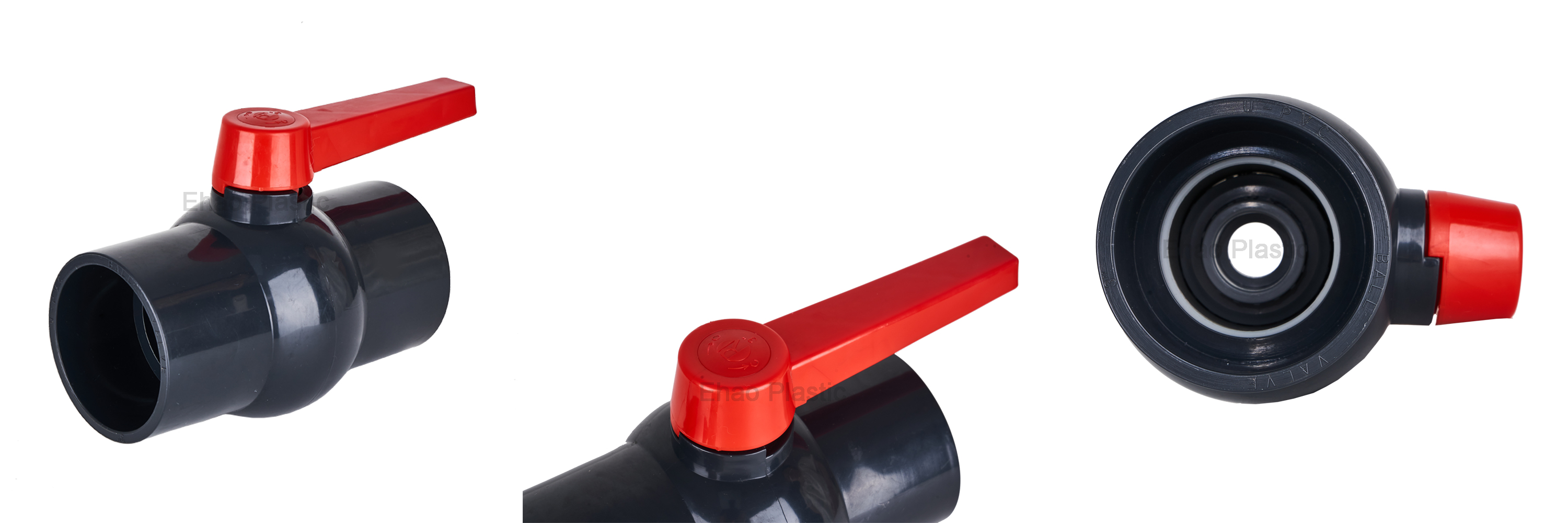
What is a PVC ball valve?
A PVC ball valve uses a spherical disc (called a ball) to control fluid flow. The ball has a hole or port in its center that allows fluid to pass through when the valve is open. When the valve is closed, the ball rotates 90 degrees, blocking fluid flow. PVC, or polyvinyl chloride, is a widely used thermoplastic material known for its excellent chemical resistance, lightweight properties, and affordability.
Main features of PVC ball valve
1. Corrosion-resistant: PVC ball valves are resistant to a wide range of chemicals and are suitable for a variety of applications, including water treatment, chemical processing, and irrigation systems.
2. Light weight: Compared with metal valves, PVC ball valves are significantly lighter, which simplifies installation and reduces transportation costs.
3. Cost-effective: PVC is one of the most economical materials, which makes PVC ball valves an ideal choice for budget-conscious projects.
4. Easy to install and maintain: The design of the PVC ball valve allows for straightforward installation and minimal maintenance, which is a significant advantage in both residential and industrial settings.
5. Temperature and pressure rating: PVC ball valves can withstand a range of temperatures and pressures, although they are generally not suitable for high-temperature applications.
Structure of PVC ball valve
The structure of the PVC ball valve consists of several key components:
1. Valve Body: The valve body is typically made of PVC and houses the internal components. It is designed to withstand the pressure of the fluid flowing through it.
2. Ball: The ball is the core component that controls flow. It is usually made of PVC or other plastic materials and has a hole that aligns with the flow path when the valve is open.
3. Stem: The stem connects the ball to the handle or actuator. It allows the ball to rotate when the handle is turned.
4. Handle: The handle is the external part of the valve that the user uses to open or close the valve. It is usually designed to be easy to grasp and operate.
5.Seals and O-rings: These components ensure a tight seal between the ball and valve body, preventing leakage when the valve is closed.
6. End Connection: PVC ball valves can be equipped with various end connections such as thread, socket or flange, making them compatible with different piping systems.
Types of imported plastic ball valves
While PVC ball valves are widely used, there are other types of imported plastic ball valves available, each with its own unique properties and uses. These include UPVC, CPVC, PP, and PVDF ball valves.
1. UPVC ball valve
Unplasticized polyvinyl chloride (UPVC) is a type of rigid polyvinyl chloride (PVC) that does not contain any plasticizers. UPVC ball valves are known for their strength and durability, making them suitable for high-pressure applications. They are commonly used in water supply systems, chemical processing, and wastewater treatment.
2. CPVC ball valve
Chlorinated polyvinyl chloride (CPVC) is a thermoplastic that is more resistant to high temperatures than standard PVC. CPVC ball valves are ideal for hot water applications and are commonly used in plumbing, industrial processes, and fire protection systems. Its high-temperature resistance makes it a preferred choice in many commercial and industrial environments.
3. PP ball valve
Polypropylene (PP) ball valves are known for their excellent chemical resistance and lightweight properties. They are often used in applications involving corrosive chemicals, such as in the pharmaceutical and food processing industries. PP ball valves are also resistant to UV radiation, making them ideal for outdoor applications.
4. PVDF ball valve
Polyvinylidene fluoride (PVDF) is a high-performance plastic known for its exceptional chemical resistance and thermal stability. PVDF ball valves are suitable for use in highly corrosive environments, such as those found in the chemical and semiconductor industries. They can withstand extreme temperatures and pressures, making them an ideal choice for specialized applications.
Application of PVC ball valve
PVC ball valves have a wide range of uses, including:
– Water Treatment: PVC ball valves are commonly used in water treatment plants to control the flow of water and chemicals.
– Irrigation Systems: In agricultural settings, PVC ball valves help regulate the flow of water in irrigation systems, ensuring efficient water use.
– Chemical Processing: PVC’s chemical resistance makes these valves suitable for handling a wide range of chemicals used in industrial processes.
– HVAC Systems: PVC ball valves are used in heating, ventilation, and air conditioning systems to control the flow of fluids.
– Aquarium and Pool Systems: PVC ball valves are commonly used in aquarium and pool systems to manage water flow and filtration.
PVC ball valves are an essential component of fluid control systems, combining durability, economy, and ease of use. Understanding the definition and construction of PVC ball valves, as well as various imported plastic ball valves (such as UPVC, CPVC, PP, and PVDF), can help users select the appropriate valve for their specific application. Whether for residential, commercial, or industrial use, PVC ball valves  and their counterparts provide reliable solutions for effectively managing fluid flow.
Post time: Sep-30-2025