
PVC ball valve is a valve made of PVC material, widely used for cutting off or connecting media in pipelines, as well as regulating and controlling fluids. This type of valve has been applied in multiple industries due to its lightweight and strong corrosion resistance. The following will provide a detailed introduction to the basic structure and characteristics of PVC plastic ball valves.
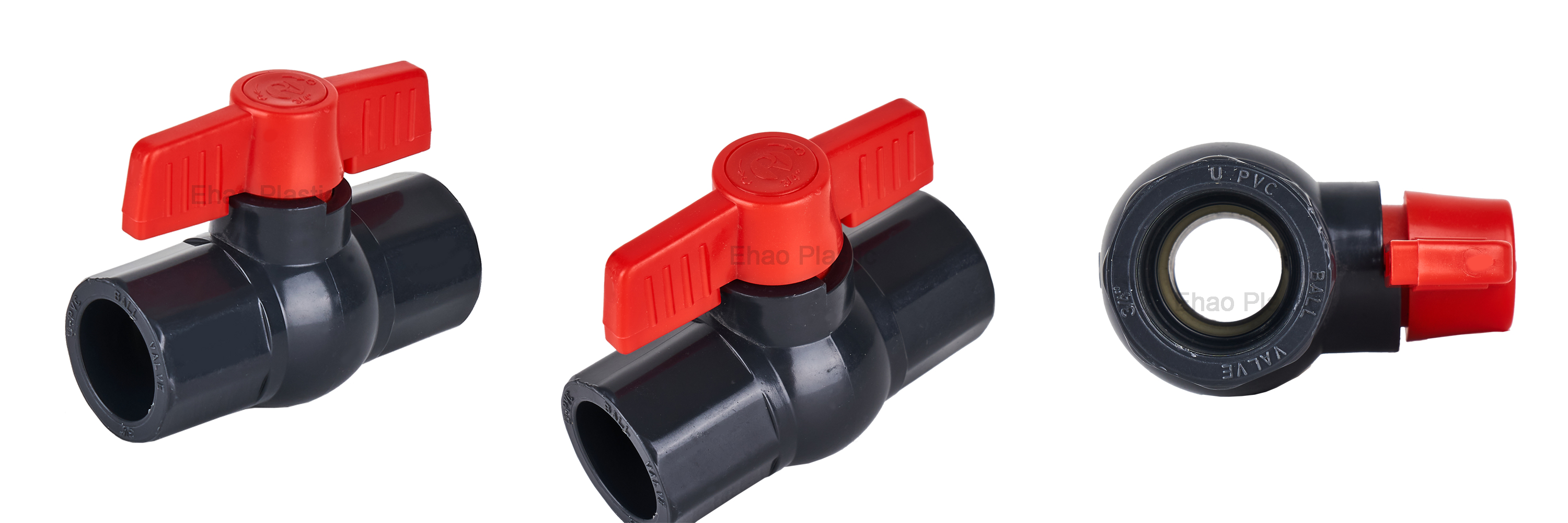
1. Valve body
The valve body is one of the main components of PVC ball valves, which forms the basic framework of the entire valve. The valve body of PVC ball valve is usually made of PVC material, which has good corrosion resistance and can adapt to the treatment of various corrosive media. According to different connection methods, PVC ball valves can be divided into various types such as flange connections and threaded connections.
2. Valve ball
The valve ball is located inside the valve body and is a spherical component, also made of PVC material. Control the opening and closing of the medium by rotating the valve ball. When the hole on the valve ball is aligned with the pipeline, the medium can pass through; When the valve ball rotates to the closed position, its surface will completely block the path of medium flow, thereby achieving a sealing effect.
3. Valve seat
The valve seat is a key component that comes into contact with the valve ball and provides a sealing effect. In PVC ball valves, the valve seat is generally made of PVC material and designed with a spherical groove structure that matches the valve ball. This can form a good sealing performance when the valve ball is tightly attached to the valve seat, preventing medium leakage.
4. Sealing ring
In order to further improve the sealing performance, PVC plastic ball valves are also equipped with sealing rings. These sealing rings are usually made of materials such as EPDM or PTFE, which not only ensure good sealing performance, but also can withstand temperature changes within a certain range.
5. Executing Agency
For electric PVC ball valves, in addition to the basic components mentioned above, there is also an important part – the electric actuator. Electric actuators include components such as motors, gear sets, and solenoid valves, which are responsible for driving the valve ball to rotate and control the flow state of the medium. In addition, electric actuators can also support remote automation control, making the operation of the entire system more convenient and efficient.
6. Connection method
PVC ball valves support multiple connection methods, including but not limited to internal thread connections, external thread connections, butt welding connections, socket welding connections, and flange connections. The choice of appropriate connection method depends on the specific application scenario and technical requirements.
Post time: Aug-06-2025