
The standards for PVC ball valves mainly cover multiple aspects such as materials, dimensions, performance, and testing, ensuring the reliability, durability, and safety of the valves.
The material standard requires the valve body to use PVC materials that comply with relevant national standards, such as UPVC, CPVC, or PVDF, with good corrosion resistance and mechanical properties; The sealing material commonly used is PTFE (polytetrafluoroethylene), which provides excellent sealing and weak corrosion resistance performance.
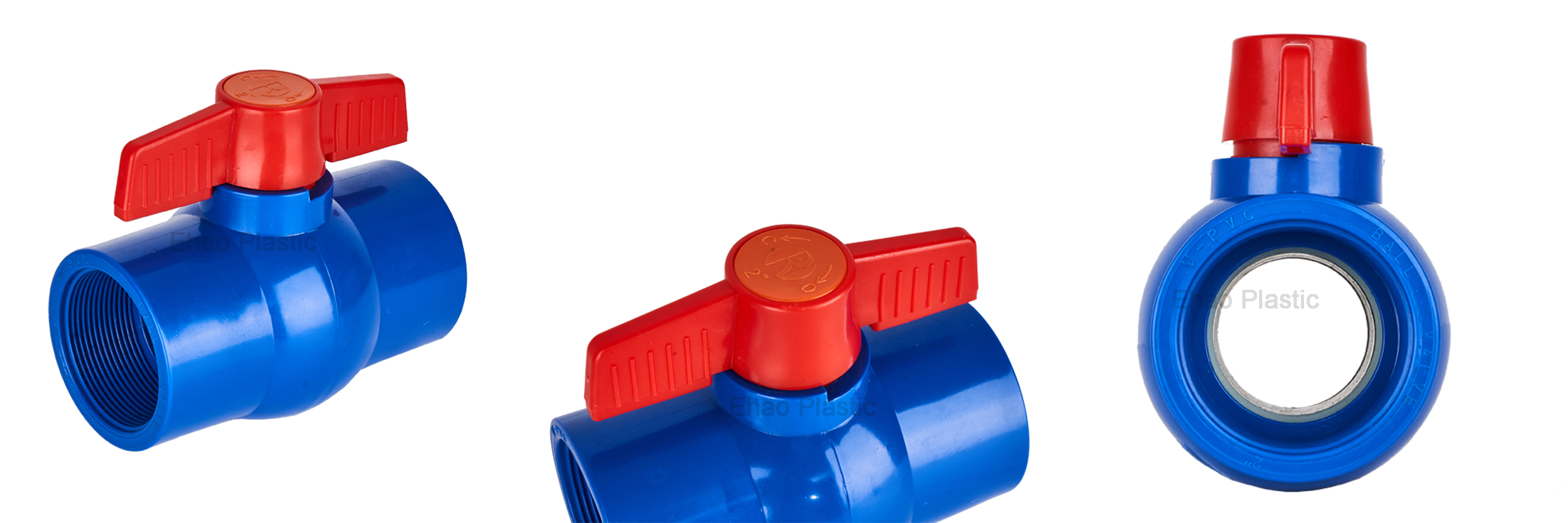
The size standard includes a nominal diameter range of DN15 to DN200, corresponding to outer diameter sizes such as 33.7 millimeters for DN25 and 114.3 millimeters for DN100. The connection method supports flanges, external threads, or socket welding; The minimum flow area is set according to the pipe series, for example, a ball valve with a nominal outer diameter of 20 millimeters needs to meet the requirement of 206-266 square millimeters.
The performance standards stipulate that ball valves must be leak free at a specified pressure (usually 1.6Mpa to 4.0Mpa), operate flexibly and quickly open and close, and be suitable for a temperature range of -40 ° C to 95 ° C or up to 140 ° C, compatible with pure water, liquid medicine and other media.
Post time: Aug-15-2025